• About
  • Services
    • Commercial Landscape Maintenance
    • Commercial Landscape Design
    • Commercial Landscape Construction
    • Irrigation Services
    • Snow Removal Services
  • Reviews
  • Careers
  • Blog
  • Contact
  • About
  • Services
  • Projects
  • People
  • Reviews
  • Careers
  • Blog
  • Contact

Snow Removal Services

When unpredictable winter weather impacts King County, your property needs rapid response from experienced crews. Keep your business accessible, safe, and protected throughout every storm event.

Request Service

"*" indicates required fields

Choose Service(s)*
Service type
What is the preferred time to call you?

Your Information

Name*
Home / Service / Snow Removal Services

Snow Removal Services

The Pacific Northwest presents a unique winter weather challenge that catches many property owners off guard. Unlike regions with predictable, consistent snowfall, the Seattle metroplex experiences what meteorologists call “episodic winter events”—periods of relative calm punctuated by sudden, sometimes severe snow and ice conditions that can bring commercial operations to an unexpected standstill.

Our maritime climate creates a deceptive sense of security. Mild temperatures throughout much of winter lead many to underestimate the impact when arctic air masses push through the Fraser River Valley or when moisture-laden storms collide with cold fronts over the Cascade foothills. When these conditions align, the results can transform a routine Tuesday into a landscape management emergency within hours.

Property managers throughout the Seattle metroplex quickly learn about the Puget Sound Convergence Zone—a meteorological phenomenon where winds wrapping around the Olympic Mountains collide over the central Sound, often producing localized but intense snowfall. A property in Kirkland might receive 6 inches of accumulation, while a location in Renton might see only a dusting. This unpredictability makes proactive snow management planning essential rather than optional.

The region’s topography compounds these challenges. Seattle’s famous hills, the rolling terrain of the Eastside, and elevation variations across our counties mean that ice and snow affect different properties in dramatically different ways. North-facing parking lots and shaded walkways can remain hazardous for days after south-facing surfaces have cleared naturally. Understanding these microclimate variations is fundamental to effective winter property management.

Effective snow management in the Pacific Northwest requires more than trucks with plows. The region’s characteristic freeze-thaw cycles—where temperatures hover around freezing—create persistent black ice conditions that pose ongoing liability concerns for commercial properties. A parking lot cleared of snow at 3:00 PM can become an ice rink by 6:00 AM as melted snow refreezes overnight.

Professional snow management addresses these realities through an integrated approach that includes snow plowing and removal, de-icing and anti-icing applications, walkway and entrance clearing, monitoring and rapid response protocols, and post-event assessment and documentation.

The timing of de-icing applications matters as much as the materials used. Pre-treatment before a storm arrives can prevent snow from bonding to pavement, making subsequent removal more efficient and reducing the total amount of de-icing material needed. This approach minimizes environmental impact while maximizing safety—an essential consideration in a region where stormwater runoff ultimately reaches Puget Sound.

For commercial property owners and managers, winter weather creates a cascade of operational concerns that extend well beyond inconvenience. Employee safety, customer access, delivery logistics, and liability exposure all intersect when snow and ice accumulate. A slip-and-fall incident in an untreated parking lot or walkway can result in consequences that far exceed the cost of proactive management.

The unpredictable nature of Pacific Northwest winter weather makes planning particularly valuable. Properties with established snow management relationships can mobilize a response within hours of a weather event. At the same time, those scrambling to find service during a storm often face delays, premium pricing, and inconsistent results. The difference between a property that opens for business as usual and one that posts closure notices usually comes down to preparation completed months before the first flake falls.
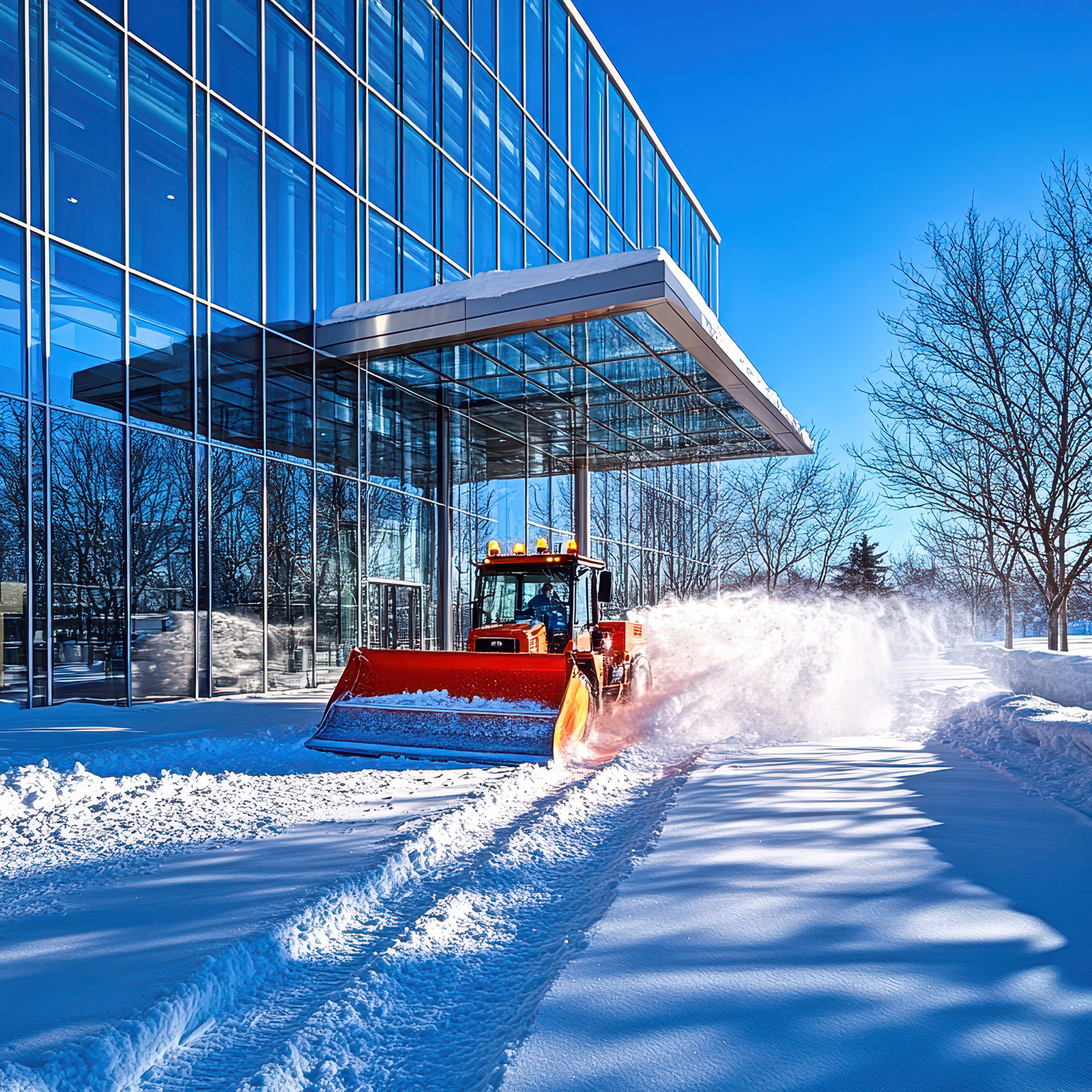
  • Commercial snow plowing – Rapid clearing of parking lots, access roads, and drive aisles using professional-grade equipment operated by crews experienced with the Pacific Northwest’s characteristic wet, heavy snow.
  • Ice management and de-icing applications – Strategic treatment of icy surfaces using environmentally responsible materials selected for effectiveness across variable freeze-thaw conditions.
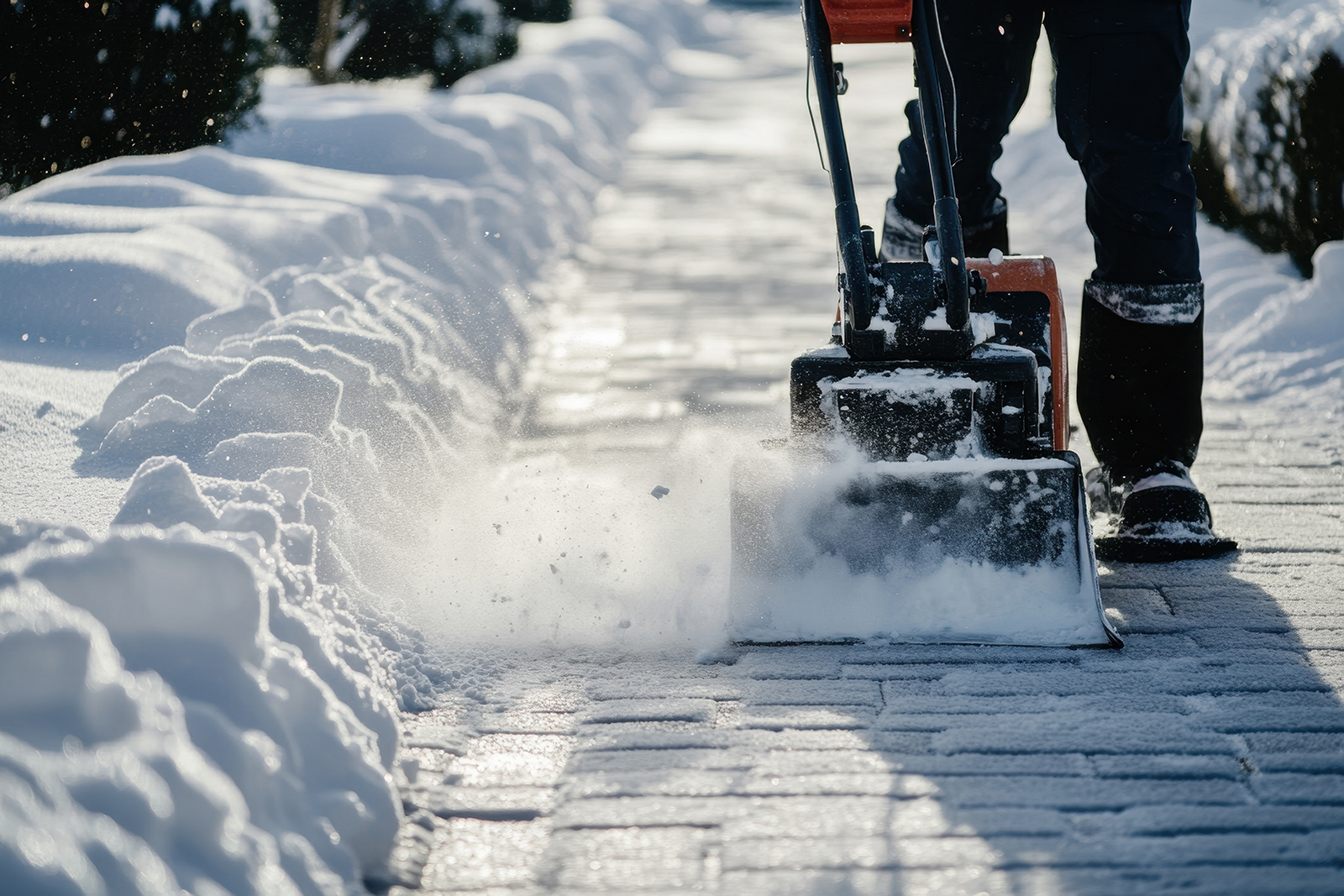
  • Sidewalk and walkway clearing – Thorough clearing and treatment of building entrances, sidewalks, accessibility ramps, and pedestrian corridors where slip-and-fall liability exposure is greatest.
  • Pre-storm anti-icing treatment – Proactive application of anti-icing materials before precipitation arrives, preventing snow and ice from bonding to pavement and improving subsequent removal efficiency.
  • 24/7 storm monitoring and response – Round-the-clock weather monitoring and rapid mobilization capabilities ensuring timely service regardless of when winter storms impact your property.
  • Snow stacking and hauling – Relocation and removal of accumulated snow to restore full parking capacity and eliminate drainage problems, refreezing hazards, and space constraints.
  • Post-storm property assessment – Documented evaluation of property conditions following weather events, identifying any damage and determining whether additional treatment is needed.
  • Emergency response services – Priority response for unexpected weather developments requiring immediate action outside of planned service schedules.
Tree Service - Treasure Valley Landscape

Commerical snow plowing

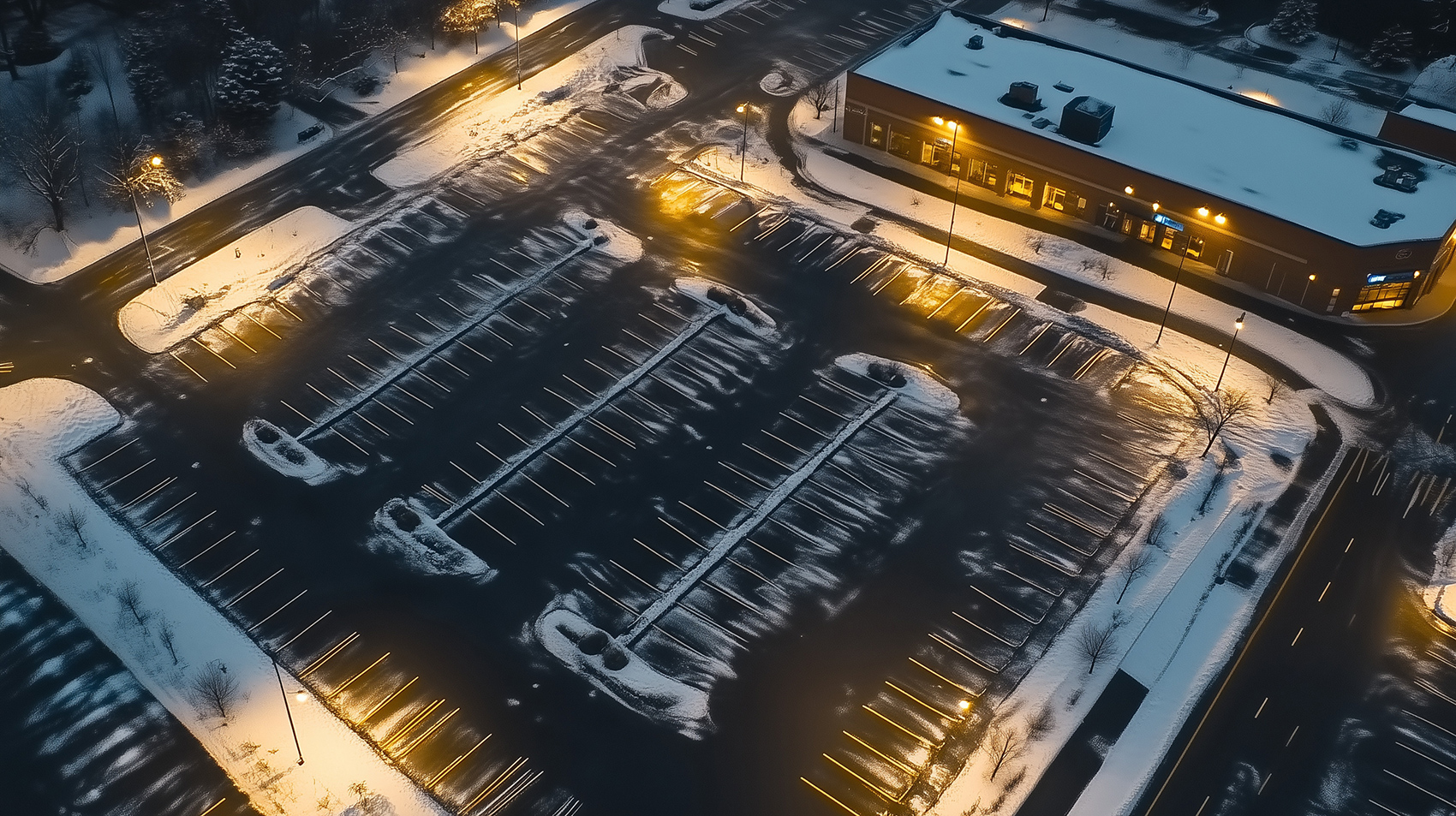
When winter storms hit, commercial properties need a quick response for business continuity and safe access. Professional snow plowing clears parking lots, access roads, and drive aisles using equipment suited to each property’s layout. The region’s wet, heavy snow requires experienced operators who can adjust blade angles and travel speeds to effectively remove snow without damaging the pavement.

Sidewalk & Walkway Clearing

Pedestrian safety zones demand specialized attention that large-scale plowing equipment cannot provide. These high-traffic areas often present the greatest slip-and-fall liability exposure for commercial properties, making thorough clearing and treatment of walking surfaces essential to protecting both visitors and property owners.

Tree Service - Treasure Valley Landscape

Pre-Storm and Icing Treatment

Applying anti-icing materials before precipitation arrives prevents snow and ice from bonding to pavement surfaces, dramatically improving the effectiveness of subsequent removal efforts.

Most Popular Questions

Why would my business need professional snow removal when it rarely snows?

The infrequency of snow in the Seattle metroplex actually increases risk for commercial properties rather than reducing it. Pacific Northwest communities lack the extensive municipal snow removal infrastructure common to regions with predictable winter weather, meaning private properties cannot rely on public services to restore safe access.

Additionally, the region’s drivers and pedestrians have limited experience navigating winter conditions, elevating the likelihood of accidents when snow and ice do occur. Properties without established snow management plans often find services unavailable during storms as demand overwhelms limited regional capacity.

What makes Pacific Northwest snow different from snow in other regions?

The maritime climate of our area produces snow with exceptionally high moisture content—often called “Cascade concrete” by locals. This wet, heavy snow is significantly denser than the dry powder typical of inland and mountain regions, making it more difficult to plow, more likely to cause structural strain on buildings and canopies, and more prone to rapid transformation into ice as temperatures fluctuate. Equipment settings, plowing techniques, and timing considerations that work effectively elsewhere often prove inadequate for the unique characteristics of Puget Sound snowfall.

How does the Puget Sound Convergence Zone affect snow removal planning?

The Convergence Zone is a meteorological phenomenon where winds deflected around the Olympic Mountains reunite over the central Puget Sound, often producing highly localized but intense precipitation. This means properties just miles apart can experience dramatically different accumulation totals during the same storm event.

Effective snow management requires understanding these localized patterns and maintaining flexibility to respond to conditions as they actually develop rather than relying solely on regional forecasts.

When should commercial properties schedule snow removal services?

Establishing snow management agreements before winter arrives is essential for reliable service. Properties that wait until snow is actively falling often discover that reputable providers are already committed to existing clients, leaving them competing for limited remaining capacity at premium rates.

Most commercial snow management relationships are established in early fall, allowing time for site assessments, equipment planning, and clear communication protocols before winter weather becomes a possibility.

What is the difference between de-icing and anti-icing?

De-icing refers to removing ice that has already formed on surfaces, while anti-icing involves applying materials before precipitation arrives to prevent ice from bonding to pavement.

Anti-icing is generally more efficient, requiring less material and labor while achieving faster results, but it depends on accurate weather forecasting and proactive scheduling.

Comprehensive snow management programs incorporate both strategies, using anti-icing when conditions allow and de-icing when reactive treatment is necessary.

Are de-icing materials harmful to landscaping and the environment?

Traditional rock salt can damage vegetation, corrode metal infrastructure, and negatively impact water quality as it enters storm drains flowing to Puget Sound. However, modern snow management employs alternative materials and calibrated application techniques that significantly reduce environmental impact.

Magnesium chloride, calcium chloride, and acetate-based products offer effective ice control with reduced harm to plants and aquatic ecosystems.

Professional application also minimizes waste by targeting materials precisely where needed rather than applying excessive quantities across entire surfaces.

How quickly can snow removal crews respond when a storm hits?

Response time depends primarily on whether a property has an established service agreement in place. Properties with pre-season contracts typically receive service within hours of actionable accumulation, with priority sequencing based on operational needs and contract terms.

Properties attempting to secure service during an active storm may face delays of 24 hours or more as providers work through committed obligations. The Pacific Northwest’s limited snow removal infrastructure makes advance planning particularly critical compared to regions with more abundant winter service capacity.

What accumulation level triggers snow removal service?

Trigger depths vary based on property needs and contract specifications, but most commercial agreements initiate plowing service at two inches of accumulation.

However, ice management often begins at any accumulation level or when temperatures create freezing conditions, regardless of snow depth. High-traffic properties, medical facilities, and operations requiring continuous access may specify lower trigger thresholds to maintain safer conditions throughout a weather event rather than waiting for significant accumulation.

Should snow be removed from my property or just relocated on-site?

Most snow events in our area can be managed through on-site plowing and strategic stacking in designated areas. However, extended storms, limited site space, or the need to restore full parking capacity may require snow hauling—physically removing snow from the property entirely.

Hauling adds cost but eliminates problems associated with large snow piles, including blocked sight lines, refreezing runoff, prolonged melting periods, and loss of usable parking spaces. Site assessment before winter helps determine which approach best suits each property’s layout and operational requirements.

What documentation should I expect from a professional snow removal service?

Comprehensive documentation protects property owners from liability and demonstrates due diligence in maintaining safe conditions. Professional snow management should include timestamped service reports showing arrival and completion times, application logs detailing materials used and quantities applied, photographic documentation of conditions before and after service, and weather data correlation confirming conditions at the time of service. These records prove invaluable if slip-and-fall incidents result in insurance claims or legal action.

How does snow removal pricing typically work?

Commercial snow management generally follows one of three pricing structures: per-push pricing based on each service visit, seasonal contracts providing unlimited service for a fixed fee, or hybrid models combining elements of both approaches.

Per-push arrangements offer lower costs during mild winters but create budget uncertainty and potential for high expenses during severe seasons.

Seasonal contracts provide predictable budgeting and guaranteed priority response but may cost more than actual service rendered in light snow years.

The optimal structure depends on each property’s risk tolerance, budget constraints, and operational requirements.

What happens if it snows overnight before my business opens?

Properties with 24/7 monitoring and response agreements receive service based on conditions rather than business hours. When overnight accumulation reaches trigger thresholds, crews mobilize to clear and treat properties before morning operations begin.

Communication protocols established during contract setup determine how property managers receive updates about service timing and completion. Without advance agreements specifying overnight response, properties may find morning access compromised while waiting for service availability during peak demand hours.

Areas of Expertise

Residential

HOAs, Master Planned Communities, Condominiums

Office

Commercial offices, Corporate Campuses, Industrial Facilities, Creative Office Spaces

Medical

Hospitals, Medical Centers, Rehabilitation, MOBs, Acute Care Centers

Education

Colleges, Universities, K-12 Schools

Recreation

Parks and Civic Spaces, Golf Courses, Museums, Theme Parks Complexes and Fields

Retail

Retail and Lifestyle Centers, Shopping Malls, Mixed Use Developments

Hospitality

Hotels, Destination Resorts, Country Clubs, Theme Parks

religion

Places of Worship, Cemeteries

Areas of Service

The dark green areas mark the core service regions for Brookstone Landscape & Design. Our skilled team manages commercial landscapes, homeowner associations, condominiums, and retail or mixed-use properties across the Seattle metropolitan area (King County, Snohomish County, Pierce County, Washington).

SPEAK WITH AN EXPERT

"*" indicates required fields

Choose Appointment*
Type of service
What is the preferred time to call you

Your Information

Name*

(425) 202-5375

sales@brookstonelandscapes.com

12610 NE 178 St
Woodinville, WA 98072

Brookstone Landscape & Design, a Sperber Company.

INTEGRITY HOTLINE
Mobile: sperbercompaniesmobile.ethicspoint.com
Online: sperbercompanies.ethicspoint.com
Phone: 844-718-1260
We are an Equal Opportunity Employer.
  • Blog
  • Reviews
  • Contact Us
  • Careers
  • Terms of Us
  • Privacy Policy
  • Copyright ©2026

Subscribe for more information

Brookstone Landscape & Design - Commercial Landscape Maintenance - Seattle, Woodinville, WA
Cleantalk Pixel