
Why out unique geology and extended wet seasons demand specialized drainage expertise—and how to protect your property from one of commercial landscaping’s most expensive problems.
Drainage problems are among the most expensive issues commercial property managers face in the Pacific Northwest—and among the least understood. A failing drainage system doesn’t announce itself with a dramatic event. Instead, it erodes property value gradually: foundation staining that signals water intrusion, plants that struggle and die despite adequate care, liability concerns from ponding water in parking areas, and the growing risk of regulatory non-compliance with Snohomish, Pierce, and King County’s increasingly stringent stormwater requirements.
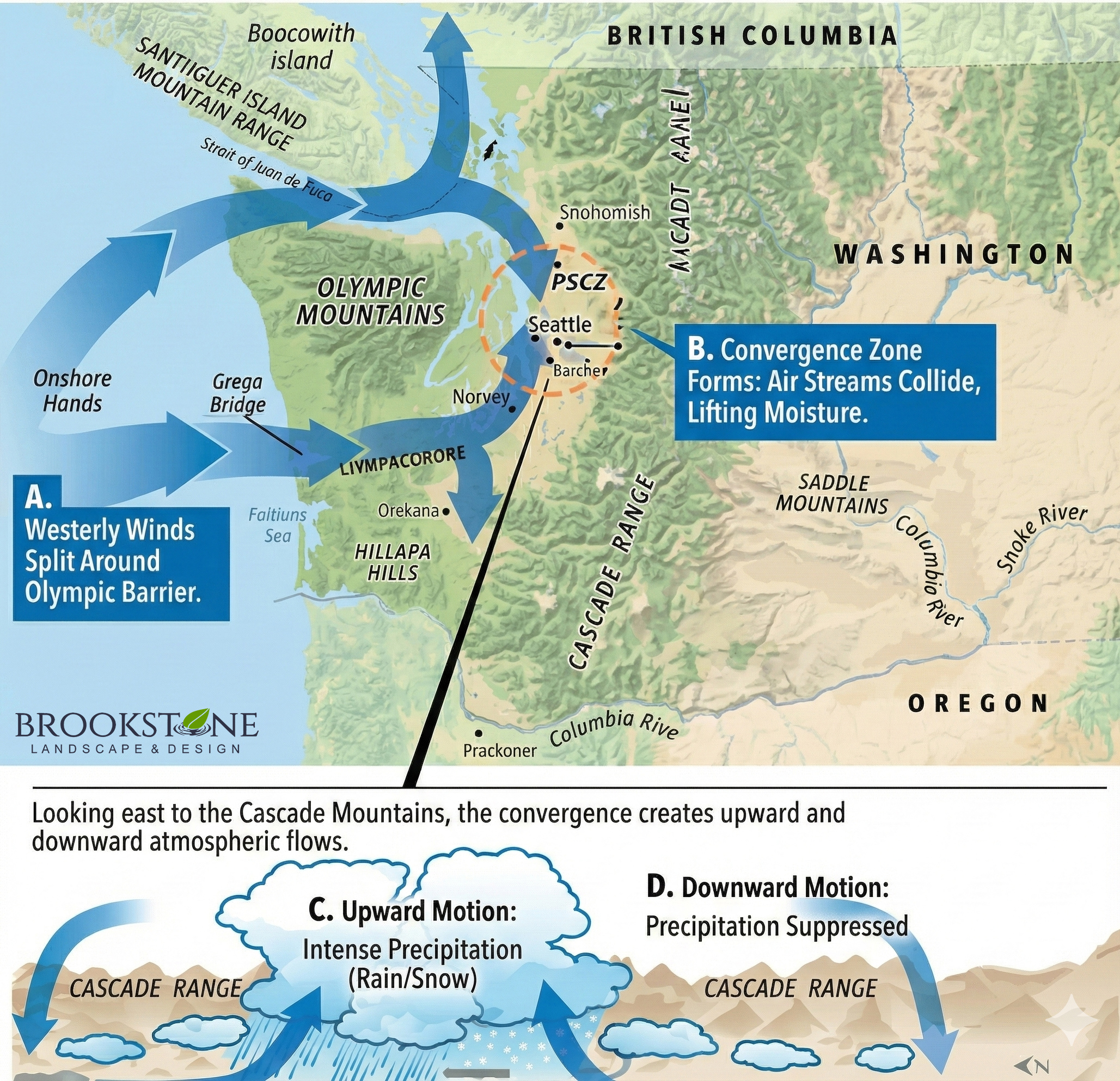
What makes drainage management particularly challenging is that national best practices often fail here. Our region’s unique combination of clay-heavy soils, extended wet seasons, and distinctive weather patterns, such as the Puget Sound Convergence Zone, creates conditions that standard drainage solutions weren’t designed to address. Understanding these regional factors is the first step toward protecting your property investment.
Why the Pacific Northwest Is Different: Regional Drainage Challenges
The Clay Soil Problem
Much of King, Pierce, and Snohomish Counties sit on glacial till, which are compacted soils deposited by retreating glaciers thousands of years ago. These soils are characterized by dense clay layers and hardpan that dramatically restrict water infiltration. Where sandy soils might absorb an inch of rainfall per hour, clay-heavy glacial till may allow only a fraction of an inch to penetrate. The result is water that moves laterally across the surface rather than draining vertically into the ground.
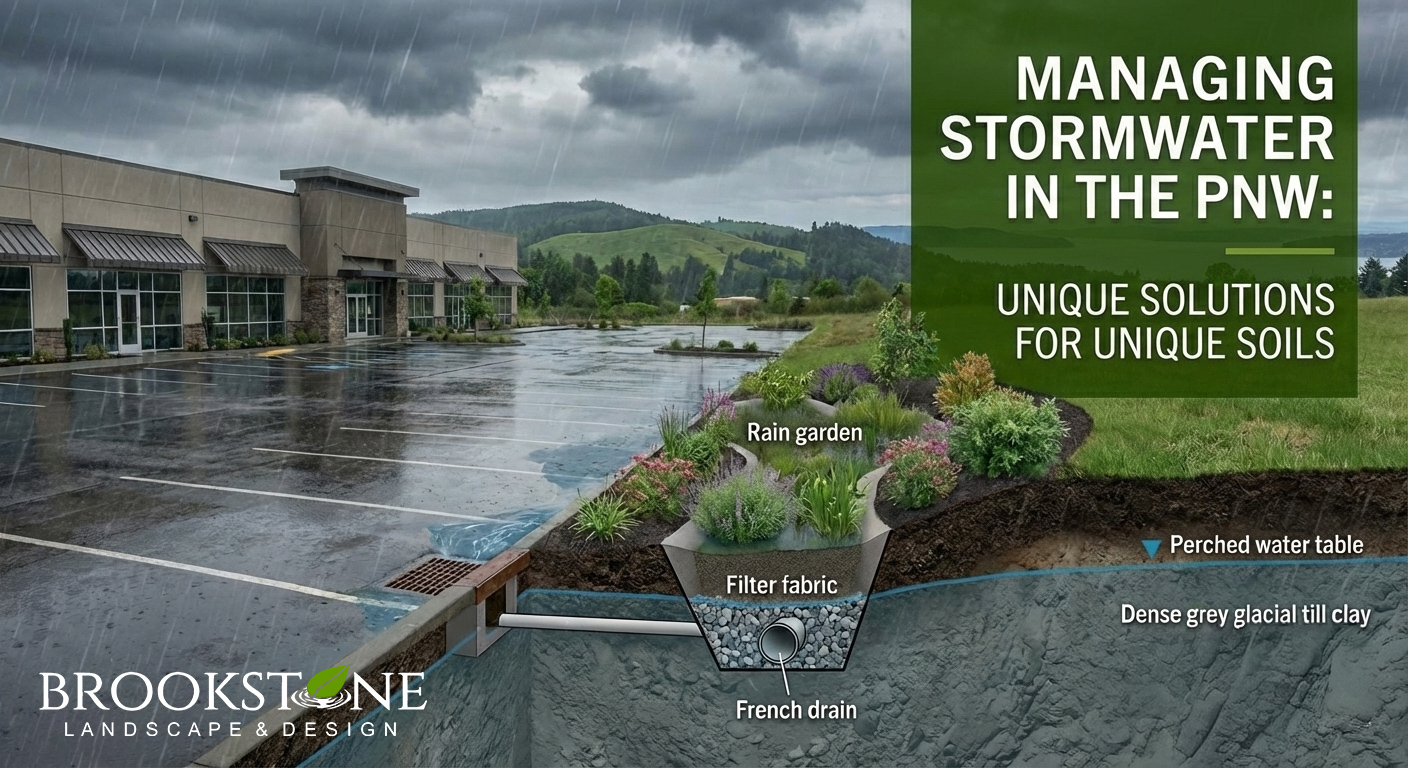
This creates a phenomenon drainage professionals call “perched water tables”—pockets of saturated soil sitting above impermeable clay layers. These conditions can persist for days or weeks after rainfall stops, keeping root zones waterlogged and creating ongoing moisture problems that aren’t visible from the surface. Many commercial properties in the Kirkland, Woodinville, and greater Eastside area sit on exactly these soil conditions.
Extended Wet Seasons and Persistent Moisture
Seattle and the surrounding areas receive approximately 37 to 39 inches of precipitation annually—a figure that actually places us outside the top 30 wettest major U.S. cities by total rainfall. But this statistic obscures what makes our climate so challenging for drainage: we receive measurable precipitation on roughly 150 days per year, more than nearly any major city east of the Rockies. Rather than dramatic downpours that pass quickly, our region experiences persistent, low-intensity rainfall from October through May.
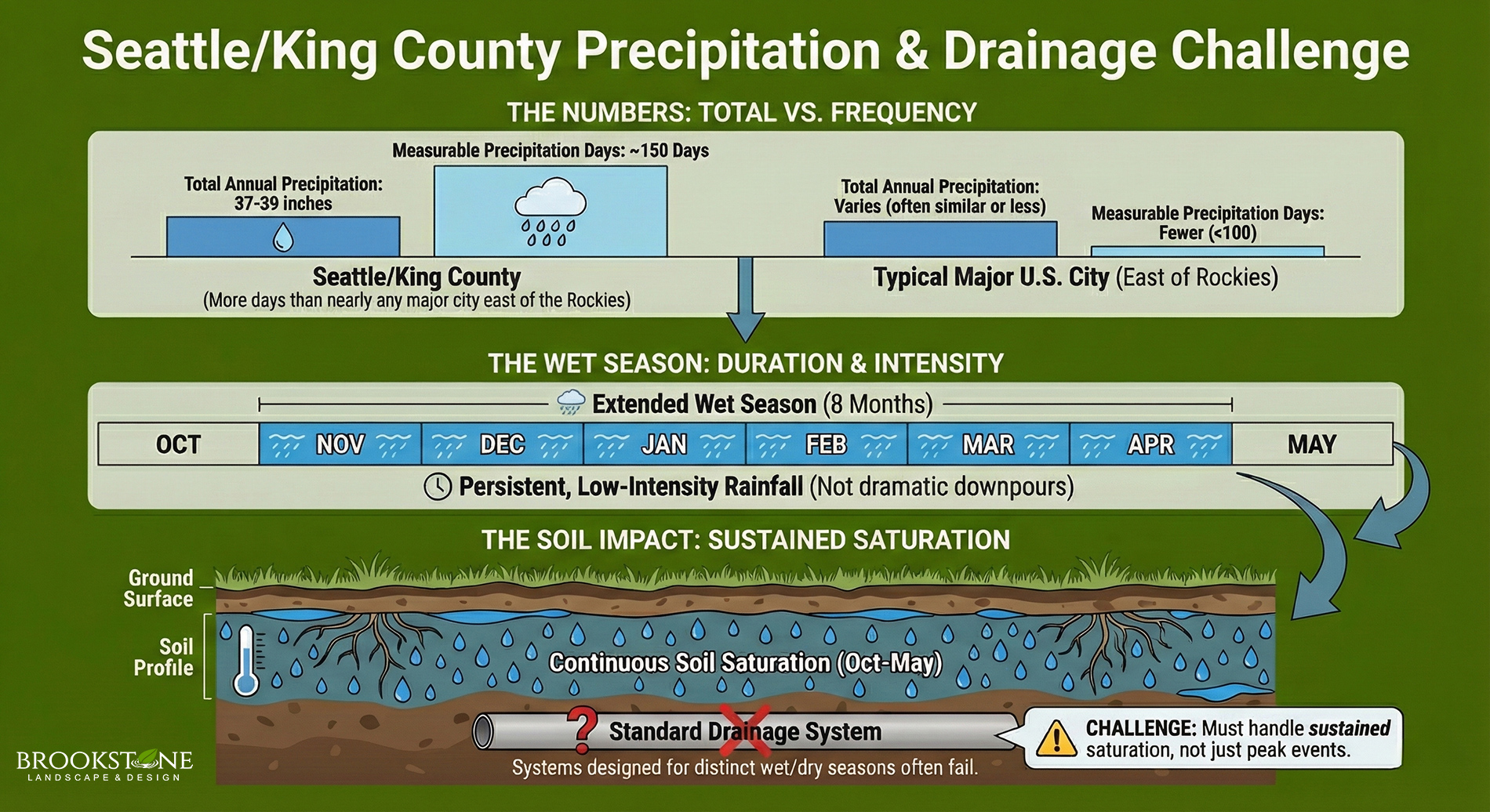
This pattern keeps soils continuously saturated for eight months of the year. Drainage systems designed for regions with distinct wet and dry seasons—where soil can dry out between rain events—often prove inadequate here. Our systems must handle not just peak storm events but sustained saturation conditions that never fully resolve during the wet season.
The Puget Sound Convergence Effect
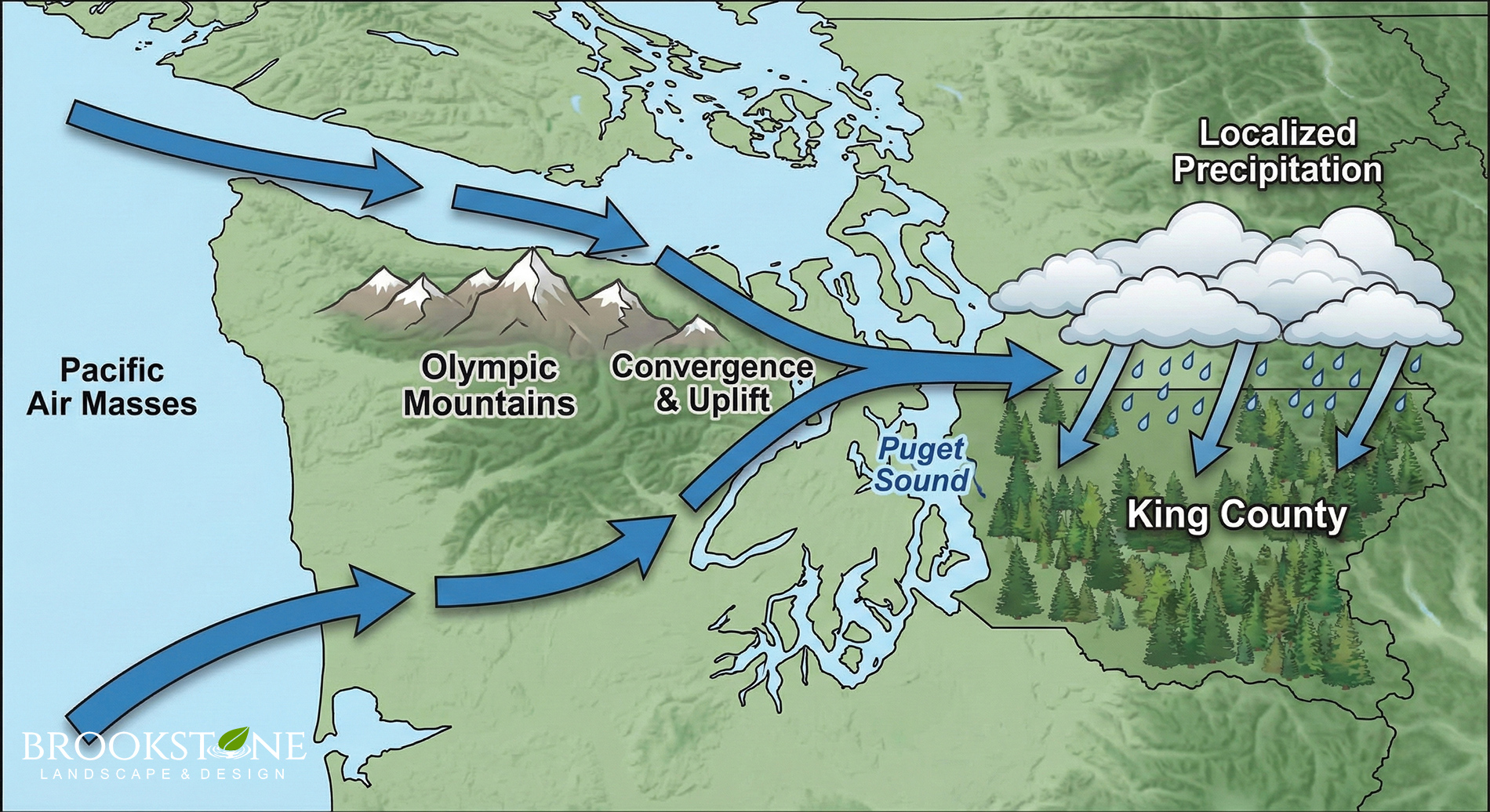
One of our region’s most distinctive weather phenomena affects drainage planning. When Pacific air masses flow inland, they split around the Olympic Mountains, then reunite east of the range. This convergence forces air upward, generating localized precipitation that can vary dramatically over short distances. Properties in the convergence zone’s path may receive significantly more rainfall than areas just a few miles away, making regional rainfall averages unreliable for site-specific drainage planning.
Recognizing Drainage Problems: Warning Signs Every Property Manager Should Know
Drainage failures develop over time, and early detection can mean the difference between a manageable repair and a major remediation project. Here’s what to watch for during routine property inspections—particularly during and immediately after rain events.
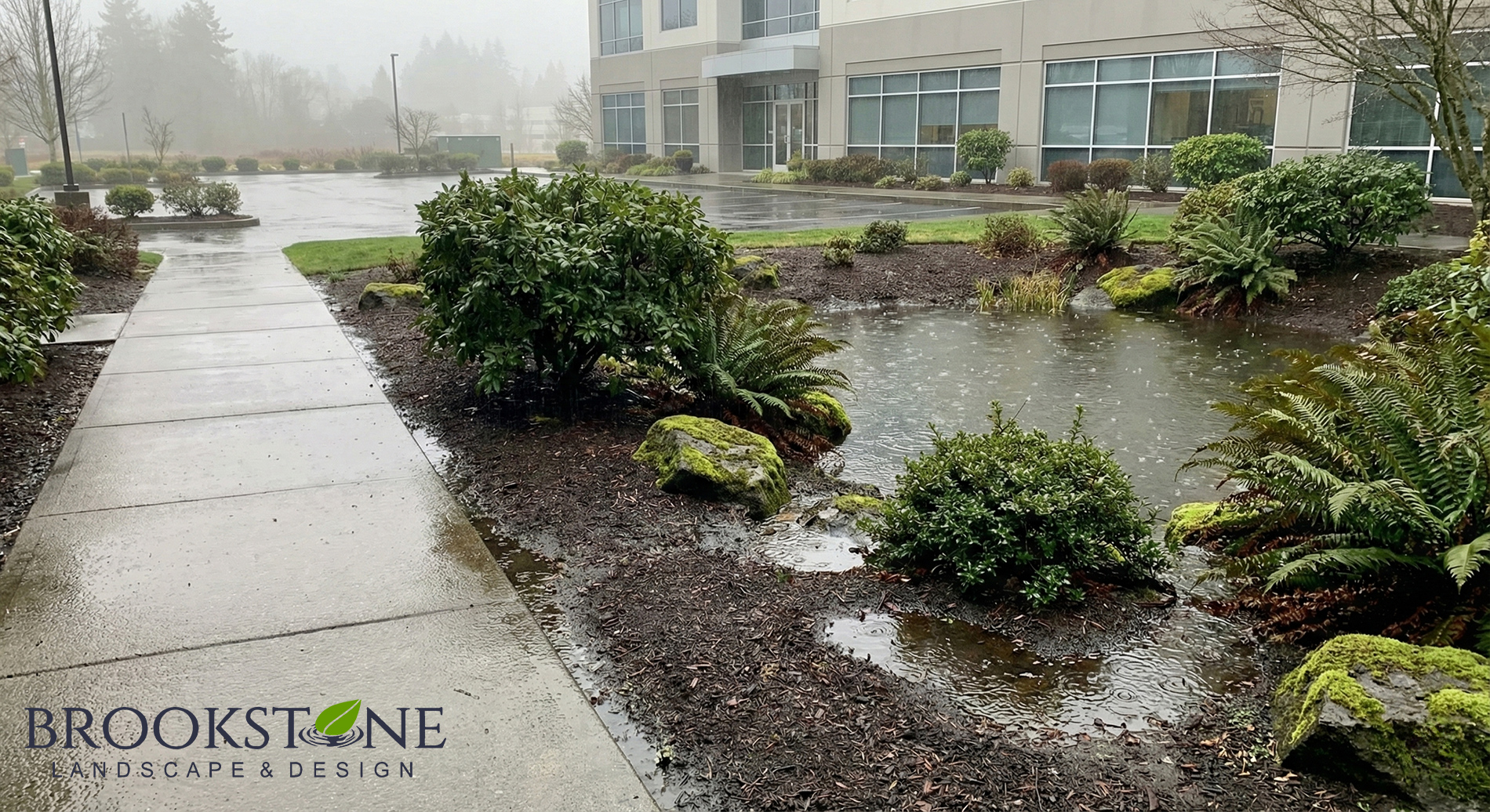
Standing water and ponding
Foundation staining and efflorescence
White, chalky deposits on concrete foundations—called efflorescence—indicate that water is moving through masonry and depositing dissolved minerals as it evaporates. Horizontal tide lines or staining patterns on foundations show historic water levels.
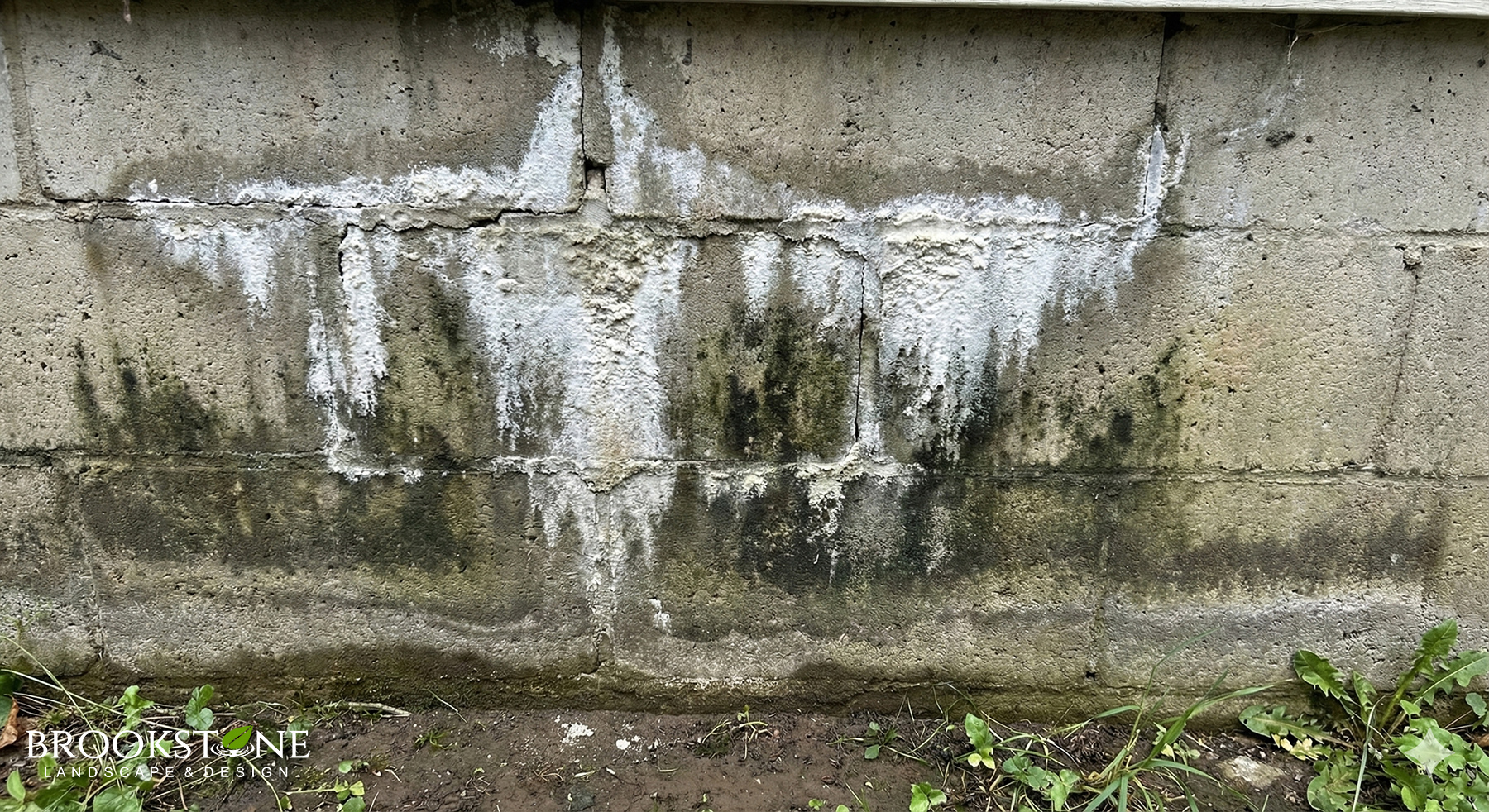
Green or black staining suggests persistent moisture supporting algae or mold growth, as shown above. These visible signs typically represent only a fraction of the moisture intrusion occurring below grade.
Erosion channels and sediment deposits
Look for ruts or channels forming in mulched beds, bare soil appearing in previously vegetated areas, or sediment accumulating on walkways and parking surfaces.
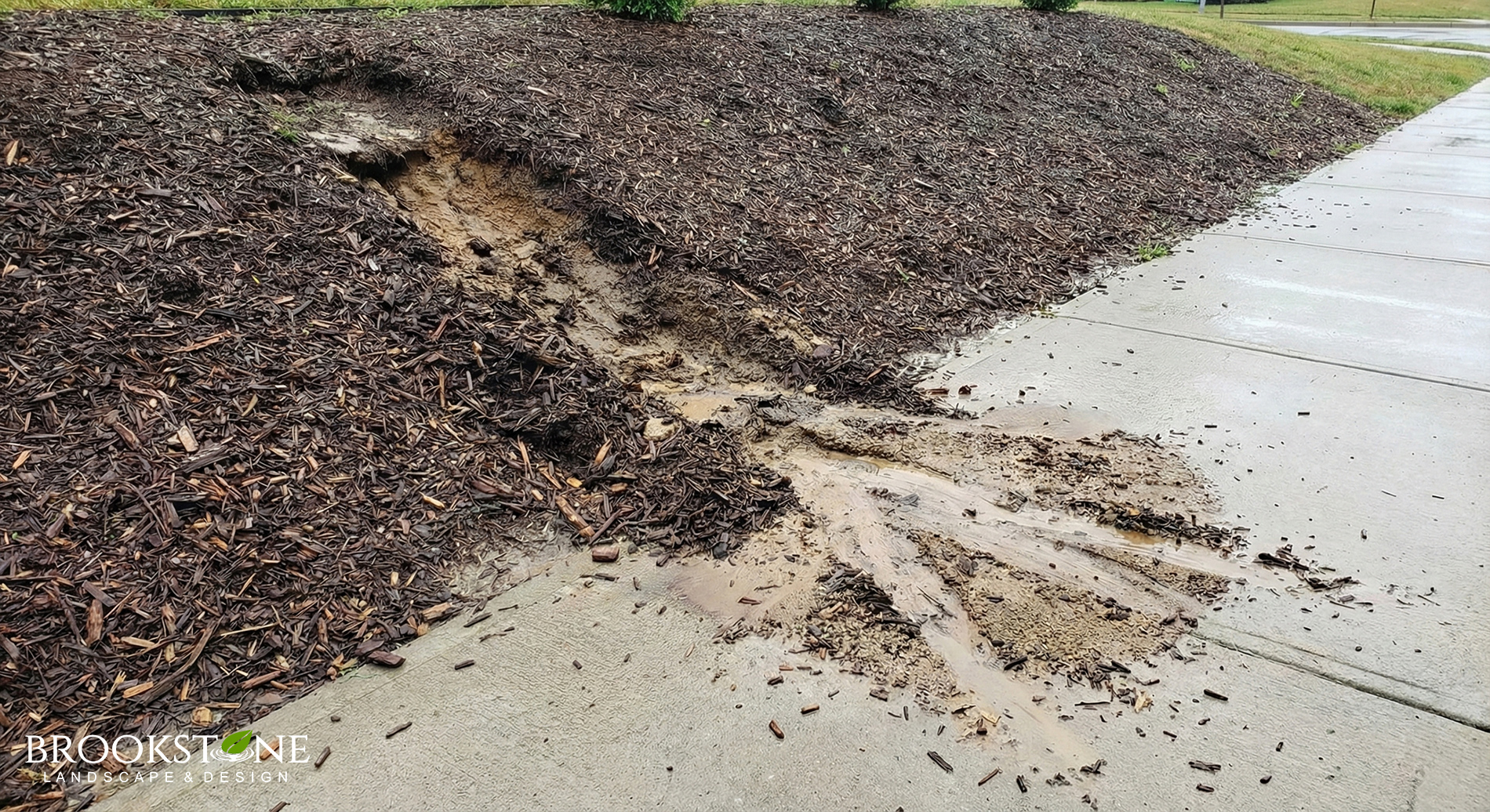
These patterns reveal where water is flowing uncontrolled across the property—and where existing drainage systems have failed or are inadequate. Erosion not only degrades landscape aesthetics but can also undermine hardscapes and expose utility infrastructure.
Struggling or declining plantings
In the Pacific Northwest, plant stress during wet months often signals drainage problems rather than disease or pest issues. Yellowing leaves, stunted growth, or dieback in areas that receive adequate irrigation during dry months usually indicate root-zone saturation.
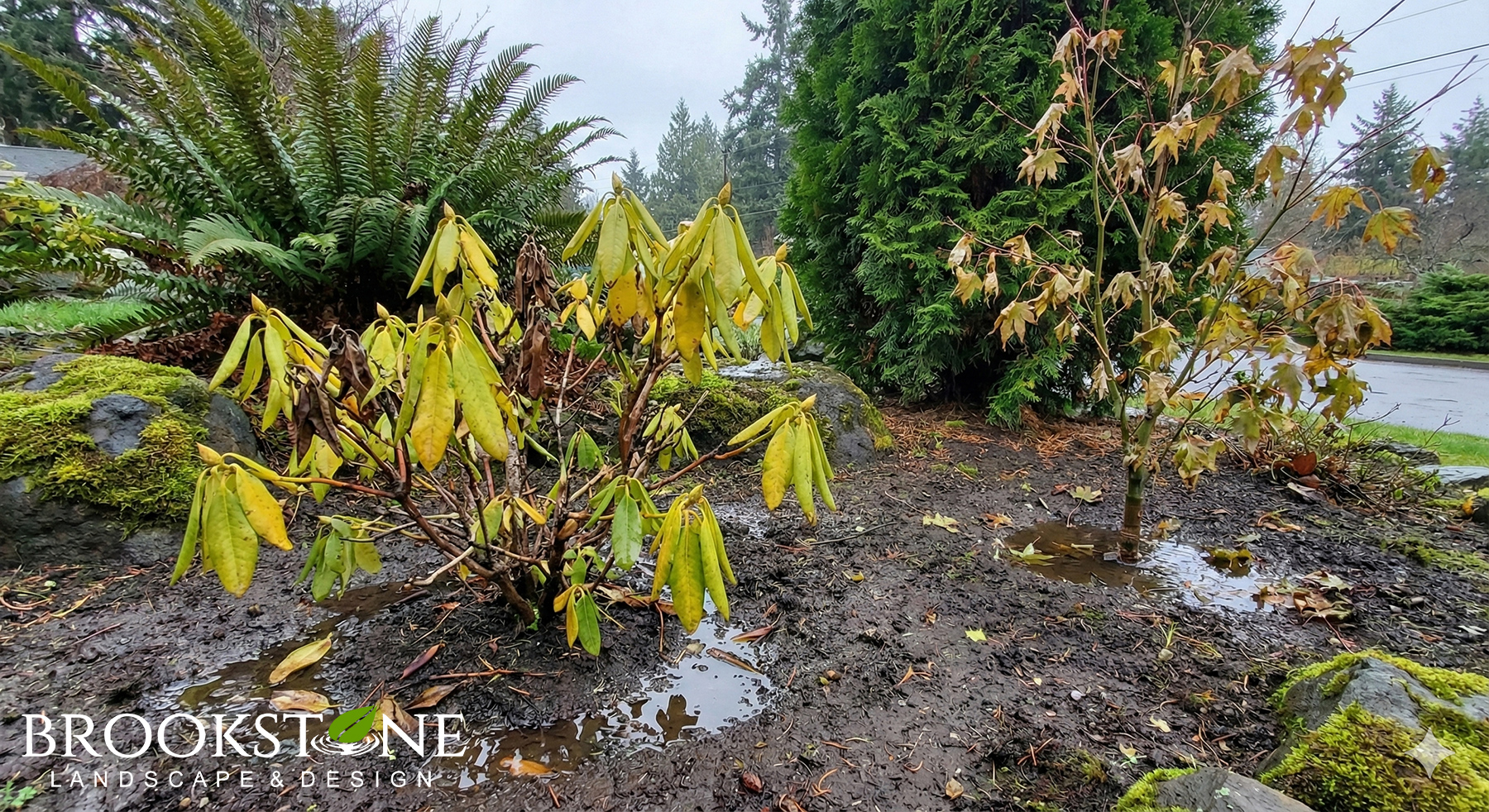
Plants essentially drown when soil remains waterlogged, as saturated conditions deprive roots of the oxygen they need. Native species adapted to wet conditions may survive where ornamental plantings fail repeatedly—a pattern that itself indicates chronic drainage issues.
Moss and Algae Growth
While moss is endemic to Pacific Northwest landscapes, excessive moss growth on hardscape, building surfaces, or turf indicates areas of persistent moisture.
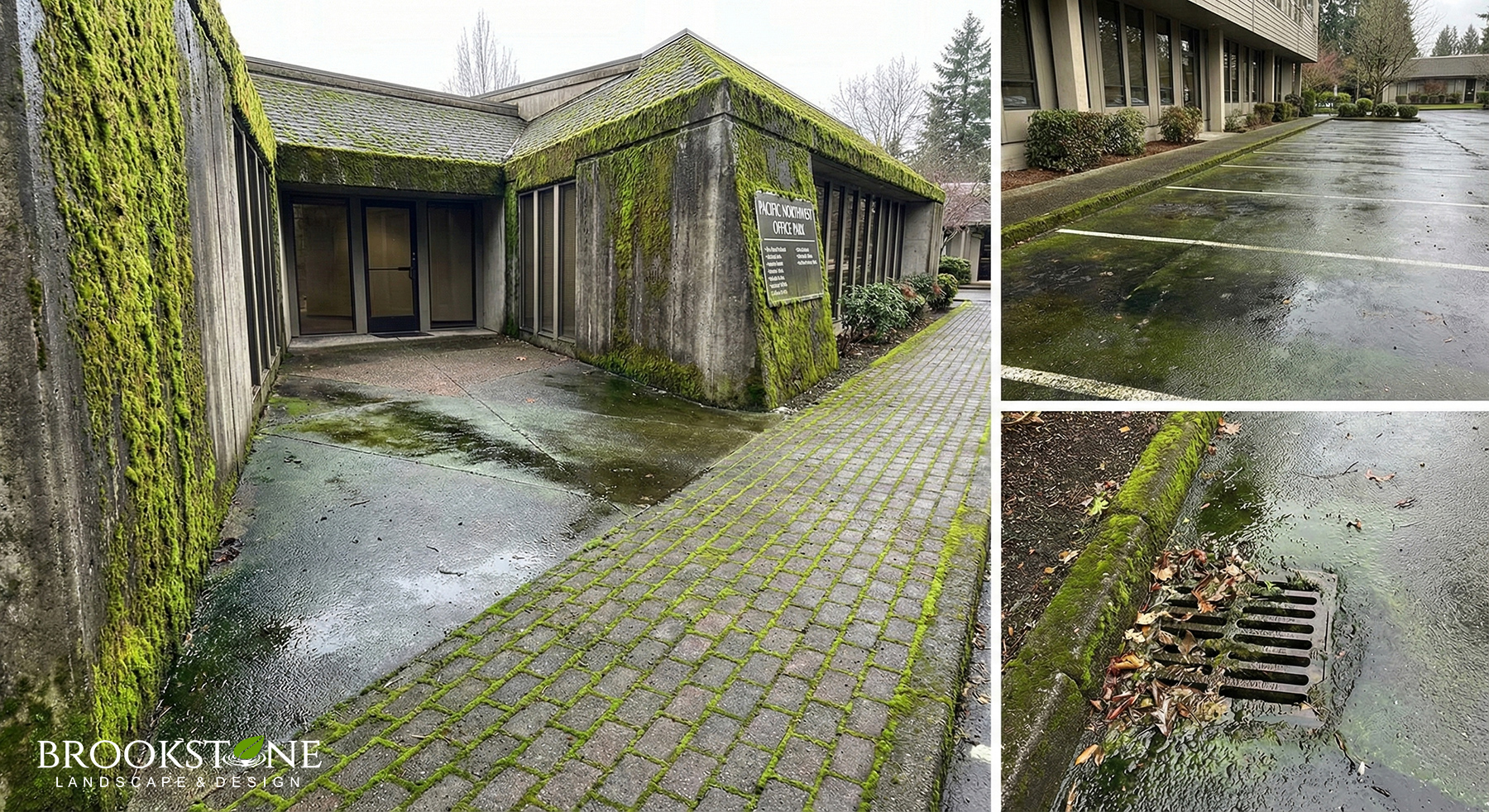
Algae growth in turf areas or on concrete surfaces points to the same conclusion. These organisms thrive in conditions that damage building materials and create safety hazards.
Drainage Solutions for Commercial Properties
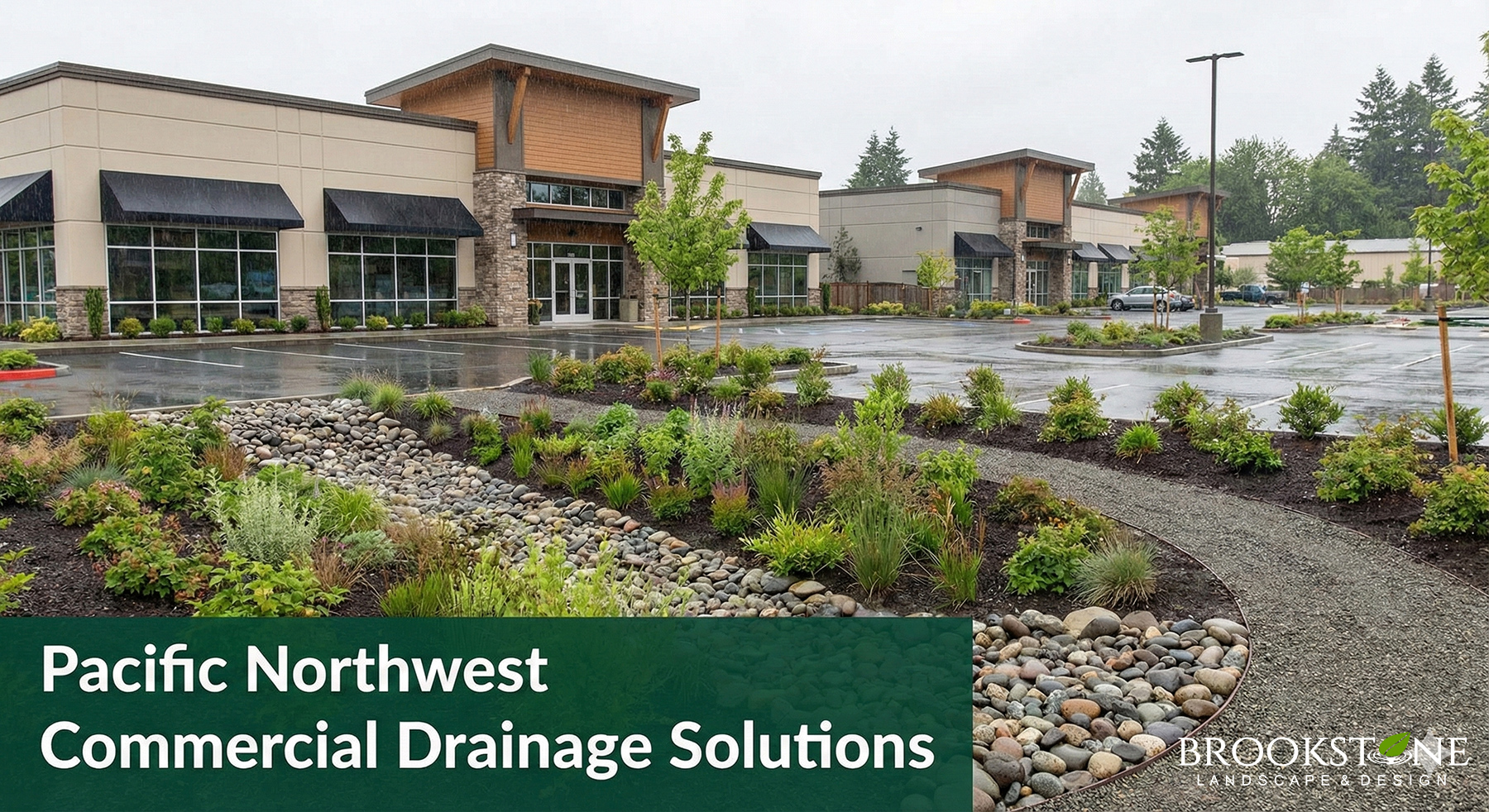
Effective drainage management typically requires combining multiple approaches tailored to site conditions. Here’s an overview of the primary solutions available for commercial properties in King, Snohomish, and Pierce County.
Surface grading and regrading
The foundation of any drainage system is surface grading that directs water away from structures and toward appropriate collection or dispersal points. Proper grading maintains a minimum slope of 2% (about a quarter-inch per foot) away from buildings. Settlement, construction activity, or landscape modifications can disrupt original grading over time, creating low spots where water collects. Regrading addresses these deficiencies by restoring proper surface slopes.
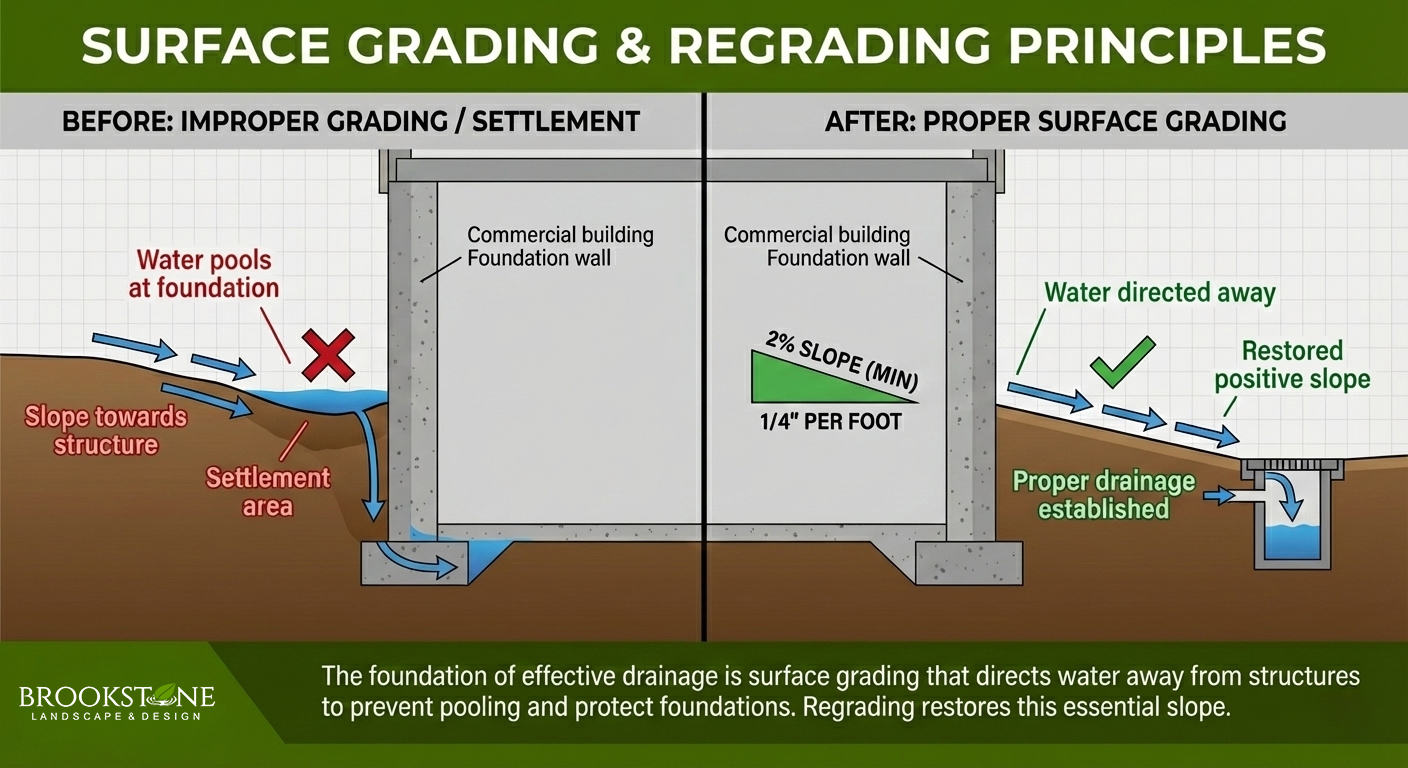
For commercial properties, grading work often extends to parking areas and pedestrian zones where pavement has settled or where original construction didn’t adequately direct water to drainage infrastructure.
French drains and subsurface drainage
French drains—trenches filled with gravel and lined with a perforated pipe—intercept subsurface water and redirect it to appropriate discharge points. In our region’s clay soils, French drains are often essential because surface drainage alone cannot address water moving through or accumulating in the soil profile. Proper French drain installation requires excavating below the clay layer or installing the system with an adequate slope to move water before it saturates the surrounding soils.
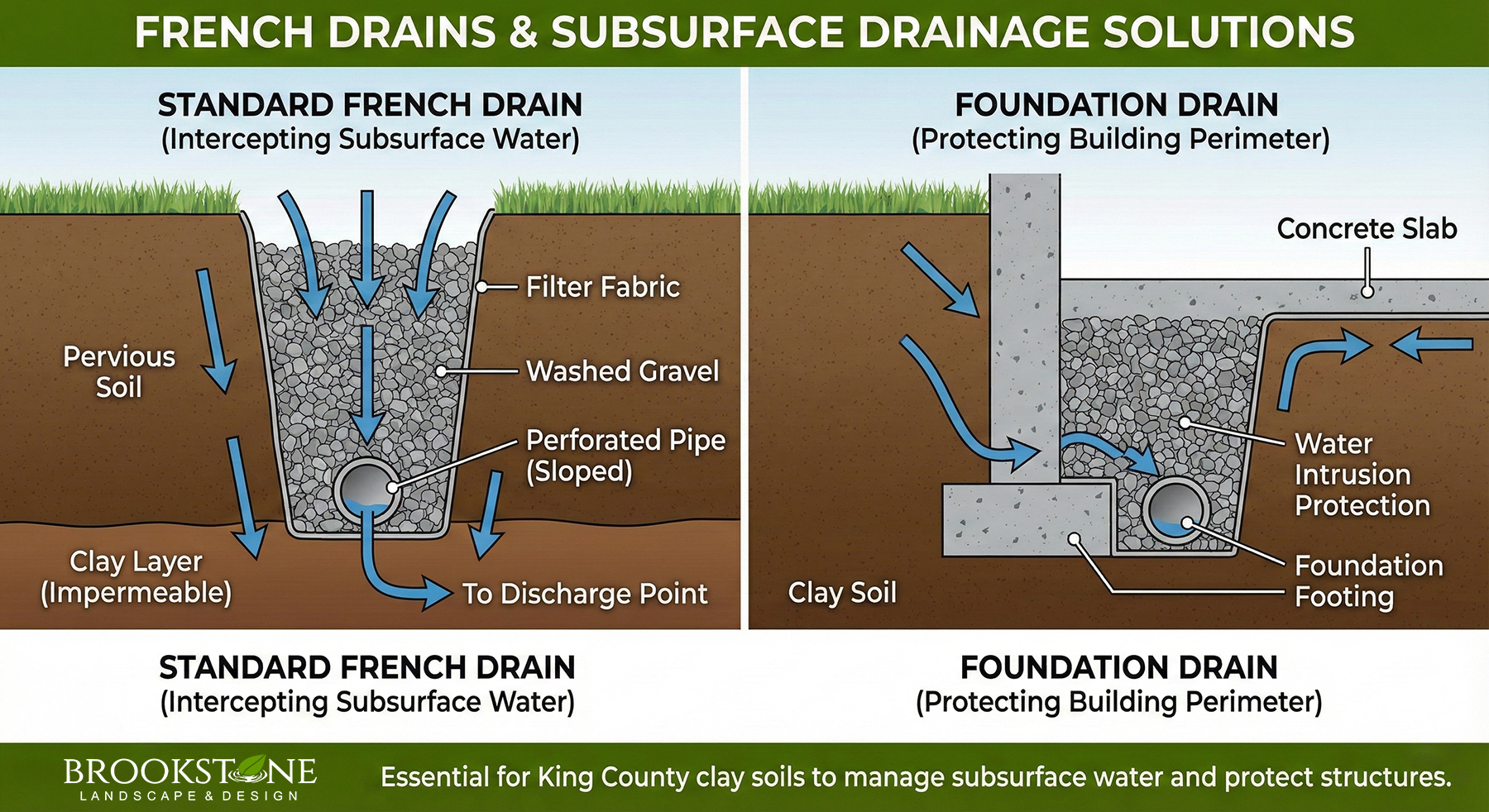
Foundation drains, a specialized application of subsurface drainage, protect building perimeters by intercepting water before it reaches foundation walls. For existing buildings, this may require excavation adjacent to foundations—a significant undertaking but often necessary where water intrusion threatens building integrity.
Rain gardens and bioretention facilities
Rain gardens are engineered shallow depressions planted with water-tolerant vegetation designed to collect, filter, and infiltrate stormwater. These systems provide both functional drainage management and aesthetic landscape value. In the Puget Sound region, rain gardens have become an increasingly important tool for commercial properties because they can satisfy stormwater management requirements while enhancing property appearance.
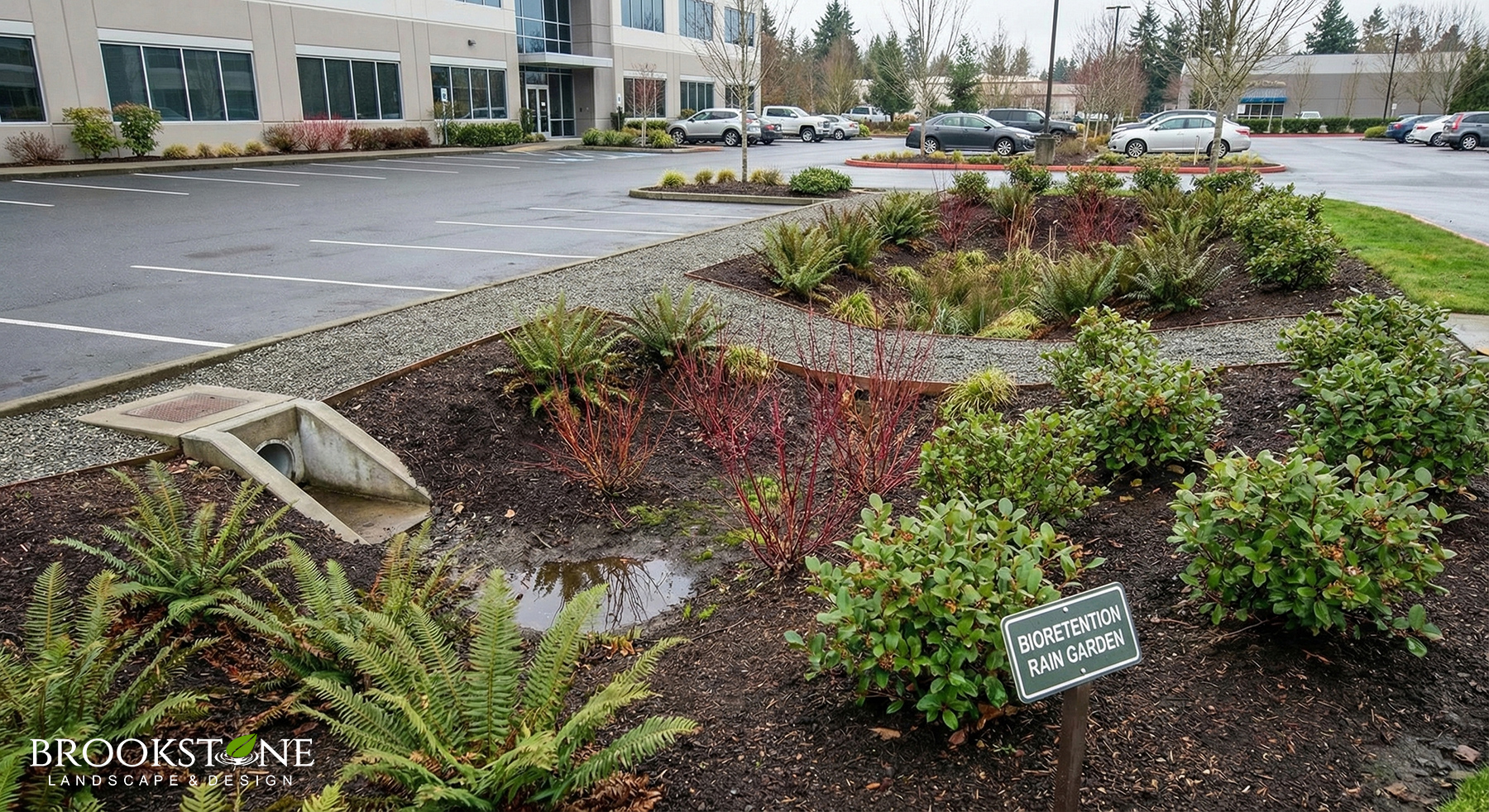
For commercial applications, bioretention facilities—rain gardens engineered to specific performance standards—may be required to manage runoff from impervious surfaces. These systems typically include engineered soil mixes designed to provide adequate infiltration rates despite our region’s challenging clay conditions. Properly designed bioretention should drain within 24 to 48 hours after a storm event while providing water-quality treatment through filtration.
Plant selection for Pacific Northwest rain gardens differs significantly from other regions. Native species like sword fern, red-twig dogwood, and salal provide effective water uptake while requiring minimal maintenance once established. The wrong plant selections can compromise system function and create ongoing maintenance burdens.
Permeable hardscapes
Permeable paving systems allow water to pass through the surface, temporarily settling in a stone reservoir before infiltrating into the ground. Options include porous asphalt, pervious concrete, and permeable interlocking concrete pavers. These systems can significantly reduce stormwater runoff from parking areas, walkways, and plazas while meeting load requirements for vehicle traffic.
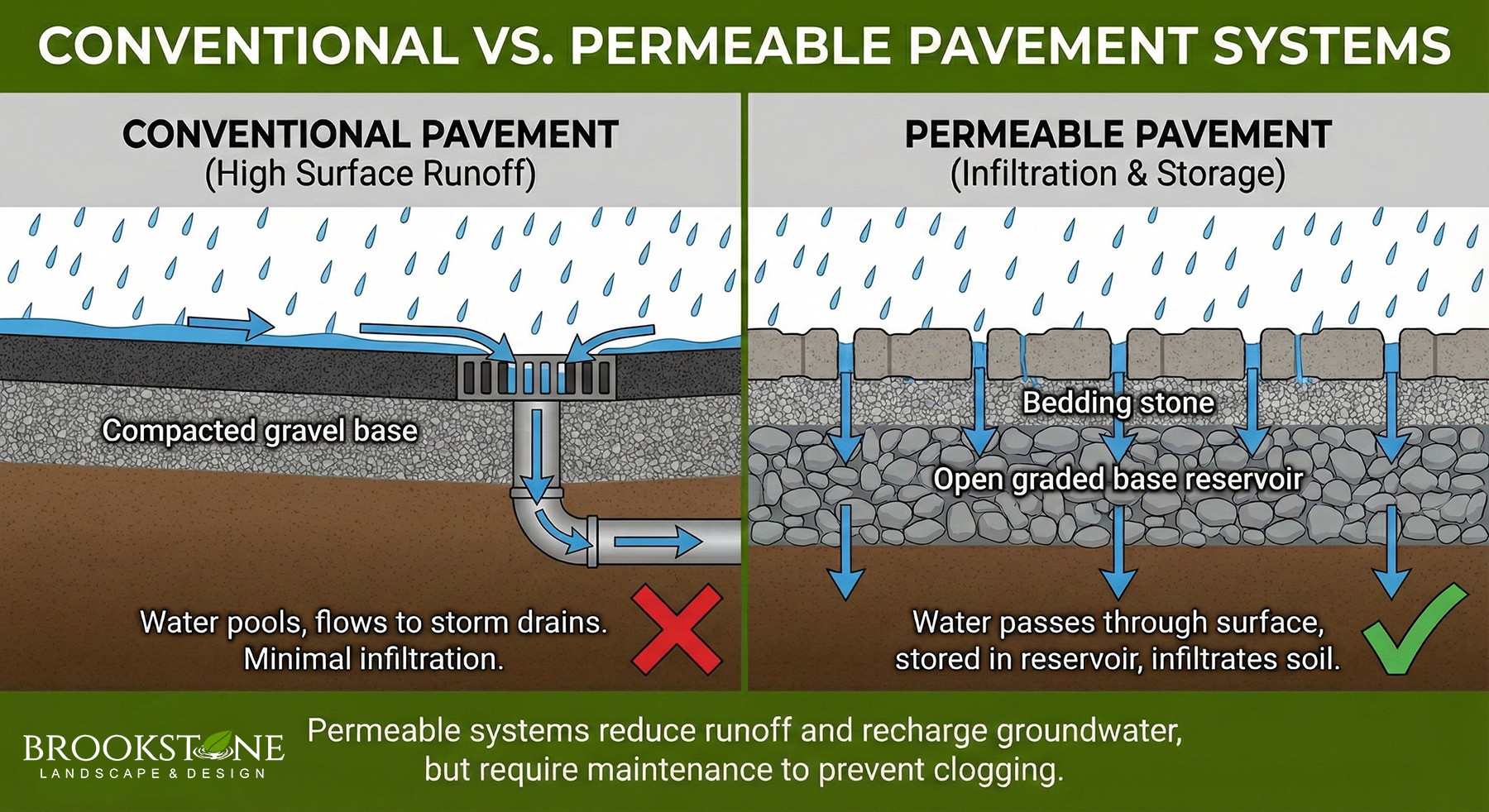
Seattle and surrounding stormwater regulations recognize permeable pavement as a strategy for reducing impervious surface area, potentially allowing greater development flexibility or reducing the required size of stormwater treatment facilities. However, permeable systems require specific maintenance—typically vacuum sweeping—to maintain infiltration capacity. Neglected systems can clog with sediment and become less effective.
For commercial properties, permeable pavement is most effective in lower-traffic areas, such as overflow parking, pedestrian zones, and fire lanes, rather than high-turnover parking areas or loading zones, where maintenance requirements may be impractical.
Understanding Stormwater Regulations
Commercial property owners face significant regulatory requirements for stormwater management. The framework is complex, with requirements varying based on property location, size of impervious surfaces, and scope of any proposed development or redevelopment.
The Surface Water Design Manual
King County’s Surface Water Design Manual (SWDM) establishes stormwater management requirements for parcel development throughout the county. Many municipalities, including Woodinville, have adopted the SWDM as their regulatory standard. The manual specifies requirements for flow control (managing the rate and volume of runoff) and water quality treatment (removing pollutants before discharge).
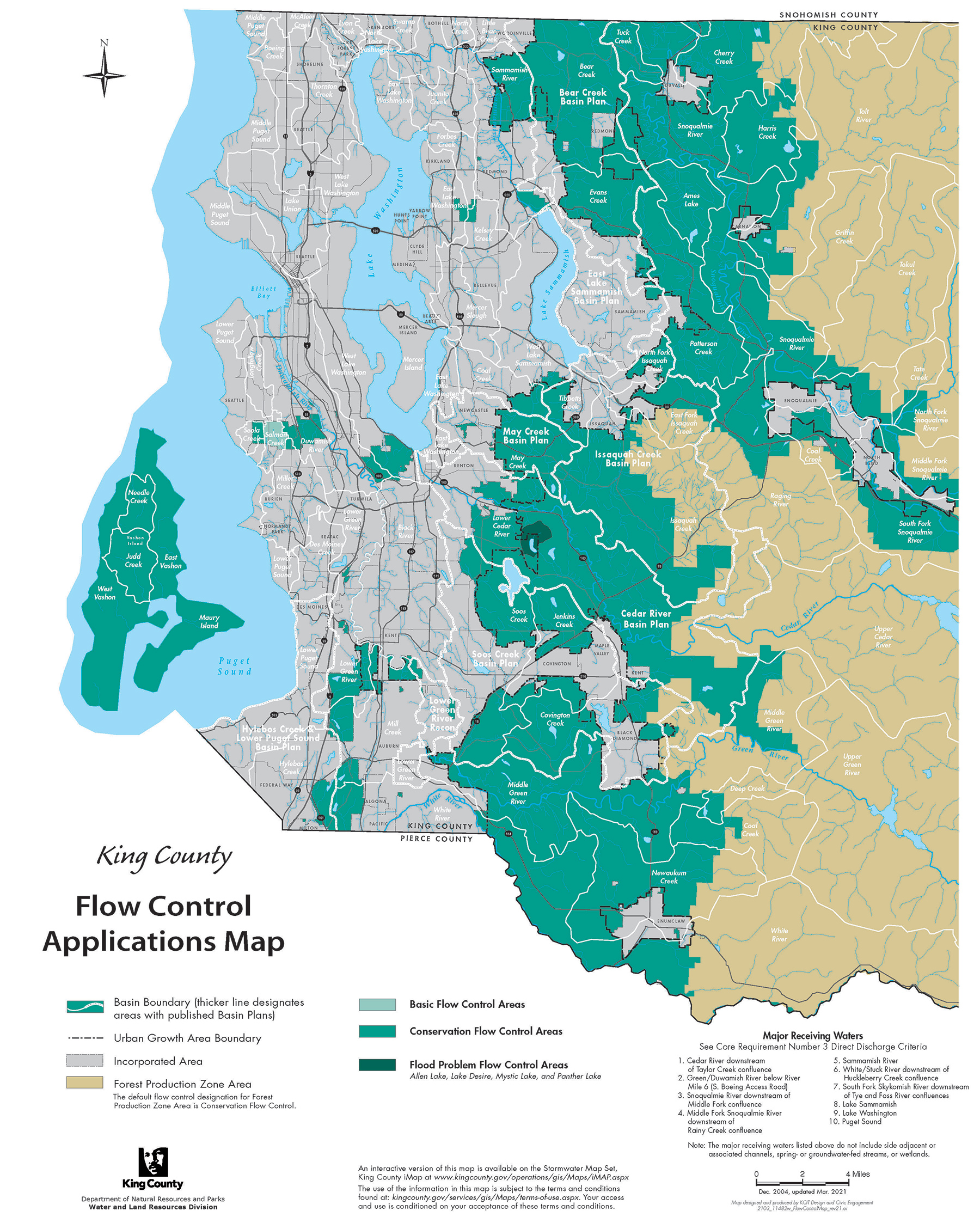
The 2021 Surface Water Design Manual, amended in 2024, represents the current standard. Projects permitted under earlier versions that haven’t started construction may need to be revised to comply with updated requirements—a significant consideration for property owners planning landscape or site improvements.
Maintenance requirements
Property owners are responsible for maintaining any privately owned stormwater drainage facilities on their property. This includes flow control facilities (such as detention ponds or vaults), treatment facilities (such as bioswales or rain gardens), and conveyances (such as pipes, ditches, and catch basins). King County Code 9.12 requires the use of best management practices described in the Stormwater Pollution Prevention Manual.
For commercial and multifamily properties receiving stormwater fee reductions, regular facility maintenance and inspection documentation may be required. Failure to maintain drainage facilities can result in system failures, property damage, regulatory violations, and potential liability for downstream impacts.
How landscape design supports compliance
Thoughtful landscape design can help commercial properties meet stormwater requirements while creating attractive, functional outdoor spaces. Bioretention facilities designed as landscape features, permeable paving integrated into pedestrian areas, and strategic regrading to direct water to planted areas all represent approaches that satisfy regulatory requirements while enhancing property value.
For properties undergoing landscape renovation or site improvement, early consideration of stormwater requirements can prevent costly redesigns or the need for separate, purely functional drainage infrastructure that consumes usable space.
When Drainage Issues Require Professional Assessment
Some drainage problems can be addressed with straightforward maintenance: clearing blocked catch basin grates, extending downspouts away from foundations, or adding mulch to exposed soil. But many issues affecting commercial properties require professional evaluation and engineered solutions.
Signs you need professional help
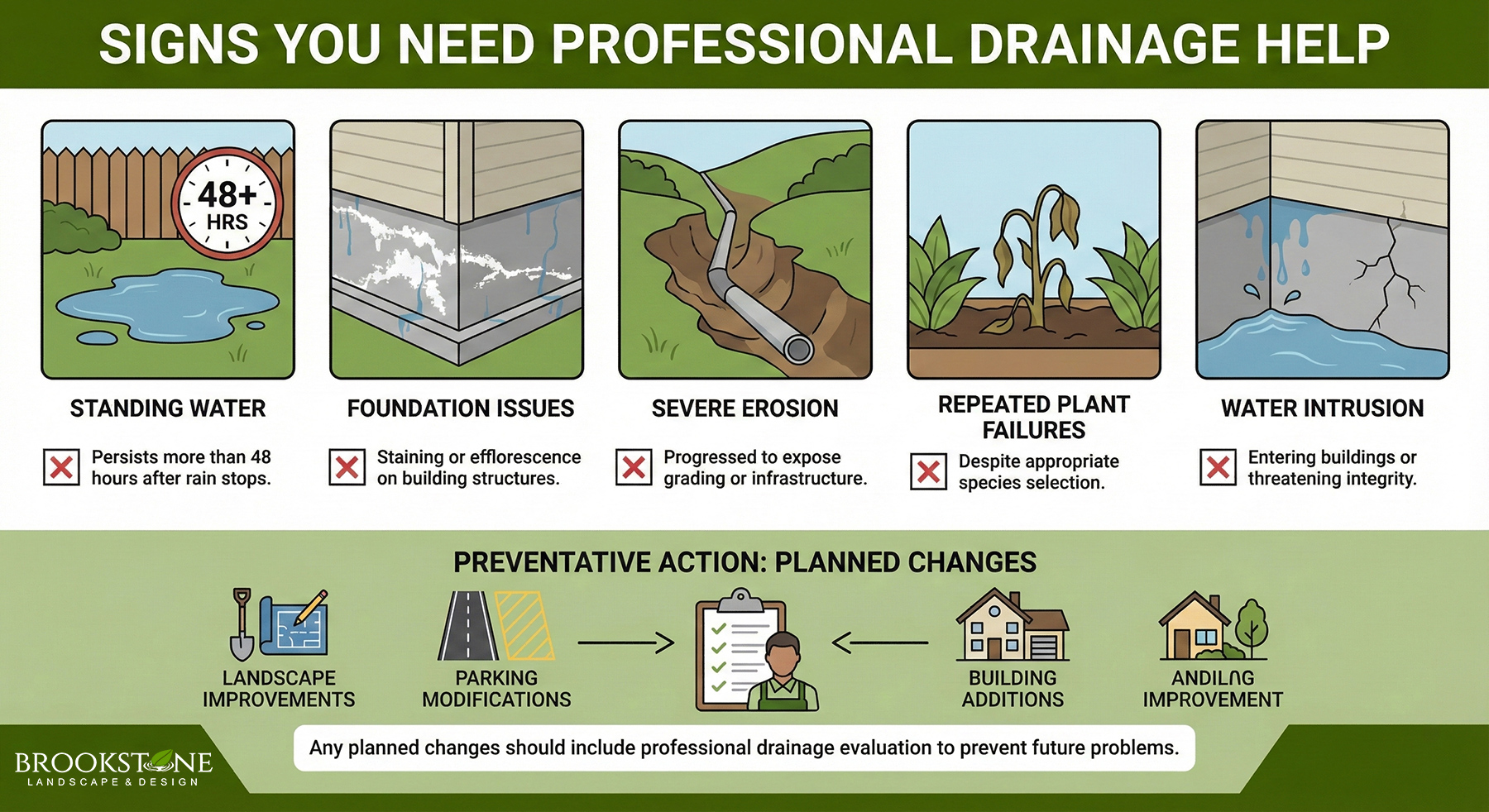
Professional assessment is warranted when you observe standing water that persists more than 48 hours after rain stops, foundation staining or efflorescence indicating water contact with building structures, erosion that has progressed beyond surface damage to affect grading or expose infrastructure, repeated plant failures in specific areas despite appropriate species selection, or any situation where water is entering buildings or threatening structural integrity.
Additionally, any planned landscape improvement, parking area modification, or building addition should include professional drainage evaluation. Seemingly minor changes can disrupt existing drainage patterns and create problems that didn’t previously exist.
What professional assessment includes
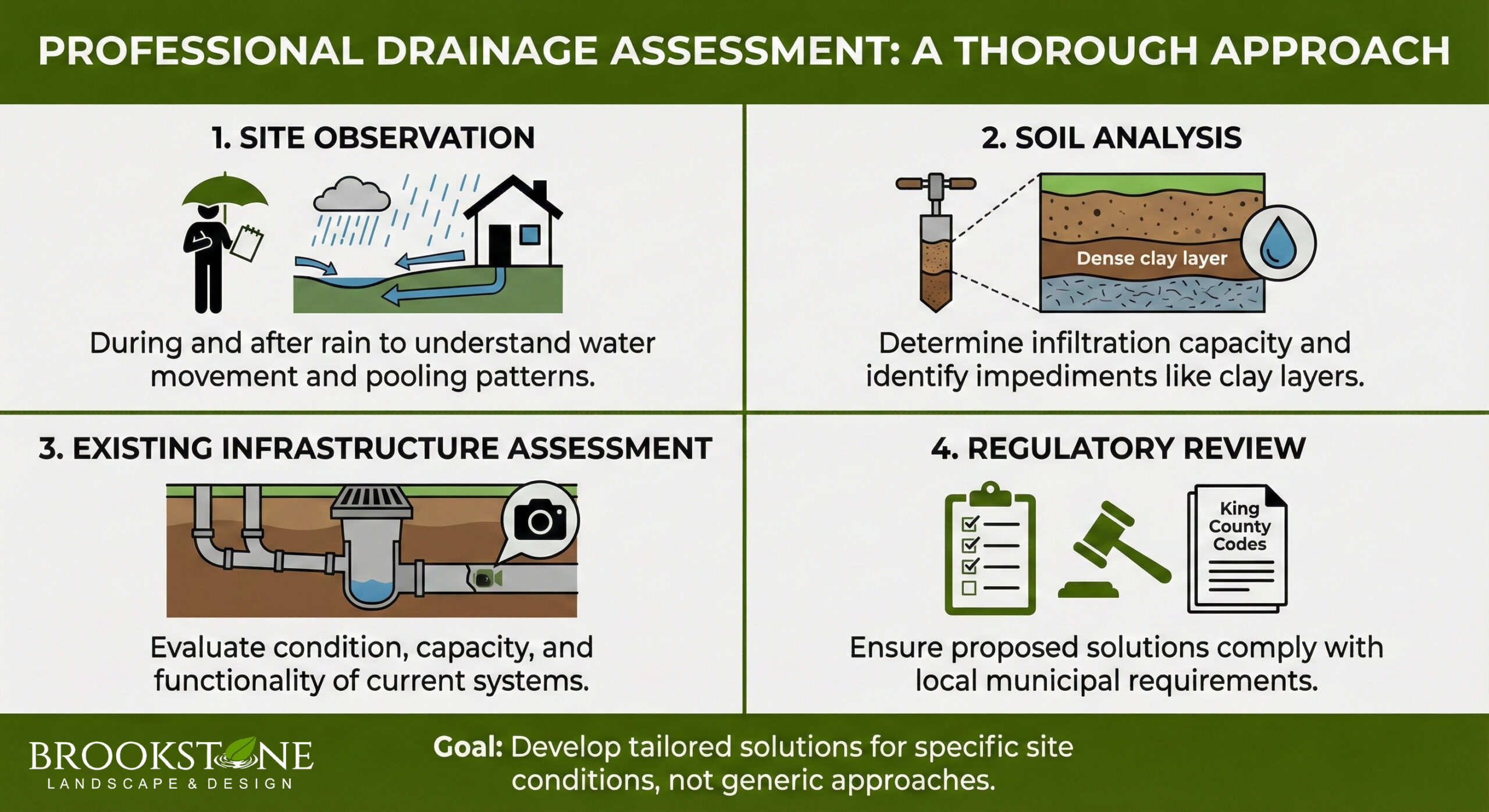
A thorough drainage assessment begins with site observation during and after rainfall events to understand how water actually moves across the property. Soil analysis may be necessary to comprehend infiltration capacity and identify clay layers or other impediments to vertical drainage. Existing infrastructure assessment identifies system condition and capacity.
Finally, regulatory review ensures any proposed solutions comply with current King County or municipal requirements.
The goal is developing solutions tailored to your specific site conditions—not generic approaches that may prove ineffective given our region’s unique challenges.
Protecting Your Property Investment
Effective drainage management protects more than your landscape—it safeguards buildings, hardscapes, and property value while ensuring regulatory compliance. In our local challenging drainage environment, proactive stormwater management prevents the gradual deterioration that can lead to expensive remediation projects.
Whether you’re addressing existing drainage problems or planning improvements that will affect site drainage, success depends on understanding our region’s unique conditions and applying solutions proven effective in Pacific Northwest clay soils and extended wet seasons.
Ready to address drainage concerns on your commercial property?
Brookstone Landscape & Design provides comprehensive drainage assessment and stormwater solutions for commercial properties throughout King, Pierce, and Snohomish Counties. From initial evaluation through design and installation, our team understands the specific challenges facing properties in Kirkland, Woodinville, and the greater Seattle Metroplex.
Contact us to discuss your drainage concerns and explore solutions tailored to your property’s unique conditions.

